

The (Dis)continuity of Colonial Era Legislation on Gender and Sexuality in India

Updated: Jul 18
Introduction
It is easy to overlook the endurance of British imperial structures in its former colonies, particularly in the legal and moral frameworks that govern gender and sexuality. Despite the formal end of the British Empire in the twentieth century, colonial legislation that criminalises same-sex relationships and / or gender variance continues to serve as the legal foundation for the persecution of LGBTQ+[1] people throughout the former colonies and prolongs their marginalisation. By the time homosexuality was decriminalised in the UK, many countries had gained independence and did not reform inherited colonial laws. As of 2024, homosexuality remained a crime in 29 Commonwealth countries,[2] representing around half of the total number of UN member states that criminalise homosexuality worldwide.[3] The British Empire was unparalleled in its systematic export of laws criminalising same-sex conduct, leaving an institutional legacy of homophobia unmatched by any other empire.[4] In a comparative analysis of 185 countries, Han and O’Mahoney found former British colonies far more likely to have legislation that criminalises homosexual conduct than colonies of other European empires or countries in general.[5] Colonial anxieties about gender non-conformity also persist: as of 2019, at least 26 states used public order, vagrancy, and misdemeanour offences to harass and criminalise gender-nonconforming people, while at least 15 jurisdictions criminalised gender expression through laws on ‘cross-dressing’, disguise, impersonation, and / or imitation—the vast majority of which originated from British colonial penal codes.[6]
This paper examines the continuity and discontinuity of British colonial-era laws relating to gender and sexuality in India and how these legal frameworks remain contested in contemporary politics. In doing so, it highlights how India’s legal system has functioned not only as a means of governance, but also as an instrument for enforcing moral and ideological codes that sustain exclusion. The paper situates India’s debates over gender and sexuality within their historical context, tracing the evolution of norms from pre-colonial traditions and histories of gender and sexual fluidity to the colonial imposition of Judeo-Christian norms, and finally to contemporary debates shaped by the constitutional promise of equality. Colonial legislation, such as the Criminal Tribes Act (CTA) and Section 377 of the Indian Penal Code, institutionalised ideals of heteronormativity and a strict gender binary, criminalising those that fell outside of these norms and casting them as threats to the social order. In particular, the paper explores the experiences of India’s hijra community, a gender non-conforming people who form an important part of India’s ‘third gender’, examining their historical significance in South Asia and the enduring influence of colonial laws on the community. Post-independence, India’s Constitution brought commitments to equality, non-discrimination, and freedom of expression, but legacies of colonial morality and normative hierarchies persist in both legal and social spheres. Recent rulings illustrate both the possibilities and limitations of legal reforms in reshaping these norms and hierarchies. Finally, the paper reflects on the contemporary politics of LGBTQ+ rights across the former British colonies, exploring the divergent legal trajectories of countries that are negotiating similar colonial legacies.
Queer identities in Indian cultural history
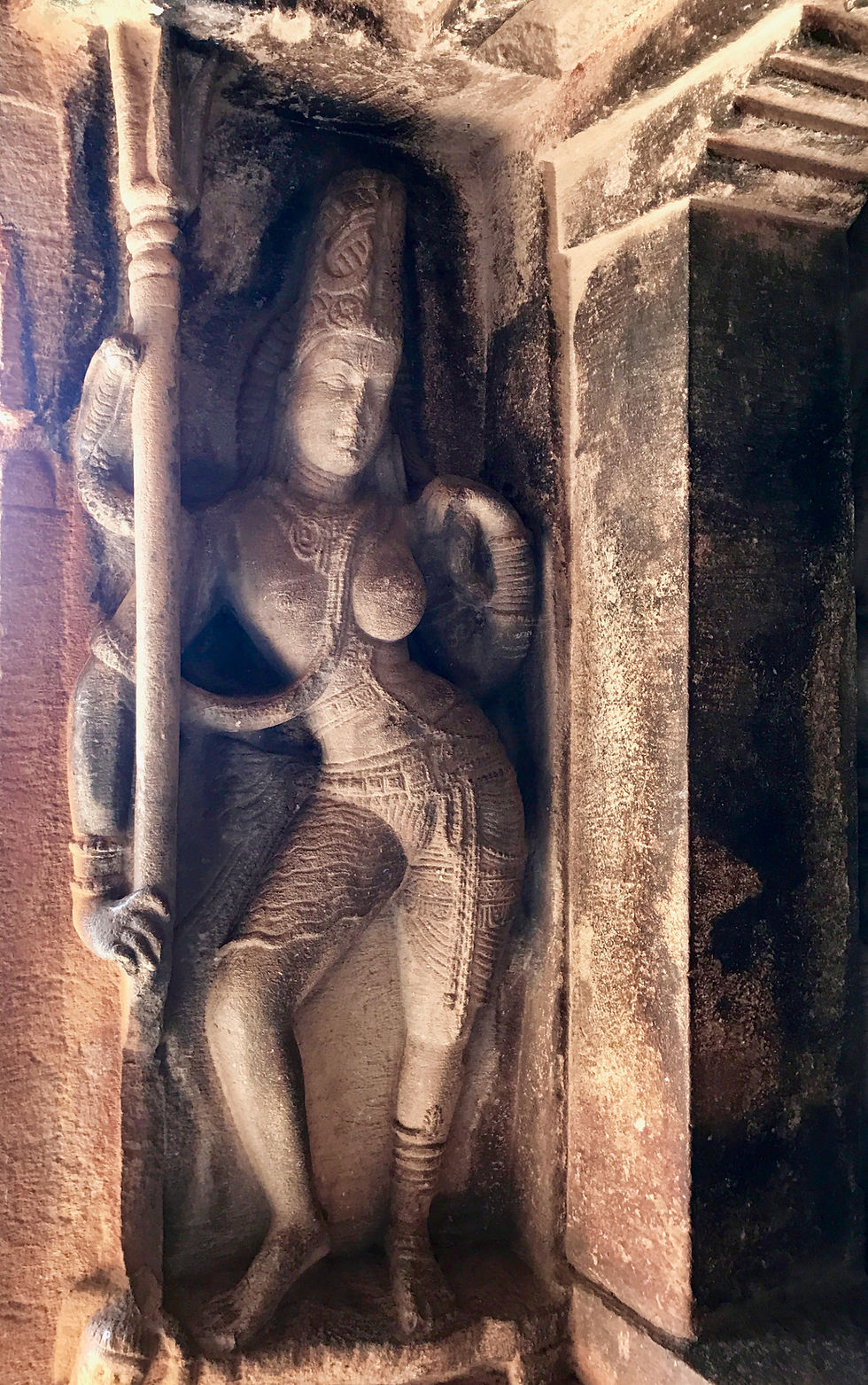
Records of queer identities in India can be traced back to Hindu mythology and ancient regional folklore, with gender and sexual fluidity abundantly depicted in Indian scripture, literature, and temple art, as well as in ancient texts including the Ramayana and the Mahabharata, which detail narratives of sex changes, homoerotic encounters, and transgender characters such as Shikandi.[7] For instance, the Hindu deity Ardhanarishvara is reportedly said to have been created by the merging of the god Shiva and his consort Parvati, depicted with a body which is masculine on the right and feminine on the left. This can be interpreted as emblematic of the harmonious bond between husband and wife, but also reflects Shiva’s androgynous identity in this form—the name itself translates to ‘the lord (Isvara) who is half (Ardha) woman (Nari)’.[8] Vatsyayana’s Kamasutra—an ‘astonishingly sophisticated’ Sanskrit textbook on social conduct and human relations, dating back to the third century—also describes same-sex relations and non-binary gender identities, and medieval Hindu temples, such as those in Khajuraho, Madhya Pradesh (900-1050 AD), and Bhubaneswar, Odisha (750-1250 AD), explicitly depict homosexuality among the erotic imagery in their sculptures.[9]

South Asia’s third gender
While the acknowledgement of genders outside the male / female binary has recently gained prominence in Western societies, people of varied gender expressions have been accepted as legitimate citizens in South Asia for centuries.[10] Among the most visible in these groups are the hijra community, who are generally phenotypical males or intersex people who adopt a feminine gender identity, some of whom undergo ritual castration.[11] Considered neither men nor women, hijras have long lived outside the Western gender binary and survived the colonial project of elimination to form an important part of the present-day (and legally recognised) ‘third gender’ in India.[12] The concept of a ‘third gender’ is derived from a complex history, encompassing various categories of gender non-conforming identities that have existed in their own right. For instance, khwajasaras (or ‘eunuchs’)[13] held prominent roles in the Sultanate and Mughal empires, providing widely varied services ranging from administrative duties to harem attendance. As in other Islamic courts, their perceived asexuality allowed them to navigate gender-segregated spaces, travelling freely between the mardana (men’s side) and zenana (women’s side), and serving as guardians of Mughal harems. They also had the prerogative to collect taxes and duties in certain areas and, as essential parts of the bureaucracy, many rose to significant positions of power during sixteenth to eighteenth-century Mughal India.[14] Today, hijras view khwajasaras as an important dimension of their past, although they have occupied distinct gendered, social, and temporal categories. Khwajasaras were masculine-embodied (castrated) slaves who worked in various roles, often in close proximity to the emperor (a social function that is now obsolete), whereas hijras expressed femininity and typically occupied a more marginal social position.[15]
Historically and in the present, the hijra community has formed kinship systems, customarily living together and engaging in public performances and dances, as well as collecting donations for their blessings (badhai), which are believed to be auspicious, during events such as weddings or childbirth.[16] In the eighteenth century, hijra lineages and badhai practices were recognised by some Indian polities, and hijra subjects were entitled to state support. The Maratha Kings of Satara granted hijras small cash allowances and rent-free land grants that could be passed down between generations, and other rulers also offered patronage to hijras. In some cases, hijras apparently held a ‘codified right to beg’, but the community also became entangled with prostitution from early on. As such, the social position of hijras in pre-colonial India was somewhat ambivalent, but it nonetheless indicates a level of acceptance of gender fluidity that allowed hijras to ‘survive if not thrive without forcing a resolution’.[17] That there was space for gender non-conforming people to exist and fulfil alternative social roles—which were often associated with considerable authority or auspiciousness—is reflective of a more accommodating and plural society. Same-sex love and romantic friendships similarly existed ‘without any extended history of overt persecution’.[18]
British colonial morality and the policing of gender and sexuality
After the demise of the Mughal empire in the eighteenth century, South Asia was washed over with new norms imposed by British colonial administrators. The tolerance of varying expressions of gender and sexuality in India, long embedded in culture and society, stood in stark contrast to Britain’s Victorian, Judeo-Christian conceptions of a clear ‘male’ and ‘female’ binary and strict heteronormativity, thereby becoming focal points for colonial regulation.[19] The queerphobic sentiments that were previously a peripheral puritanical voice in India thus became dominant under colonial rule. British merchants had been depicting hijras as immoral and ‘disgusting’ people from at least the late eighteenth century, and by the 1850s and 1860s, the community was perceived as a serious cause of concern for the empire.[20] The murder of a hijra, ‘Bhoorah’, in the North-Western Provinces, coupled with accusations of hijras kidnapping, enslaving, and castrating children, prompted a moral panic which quickly translated into intense scrutiny and surveillance.[21] To the imperial administration, any perceived deviance posed a threat to the colonial order and therefore needed to be controlled. The ‘eunuchs’, as hijras and other non-normative gender identities were referred to in the British colonial language, were rendered an ‘ungovernable people’, who could not be assimilated into respectable Indian society and were subject to ‘gradual extinction’.[22]
From 1860 onwards, the British Empire imposed numerous criminal laws on its colonies, beginning with India, through which it sought to restructure social norms. The introduction of Section 377 (S377) of the Indian Penal Code (IPC) as a legal transfer of the 1533 British Buggery Act made sexual activities ‘against the order of nature’, namely homosexuality, punishable by imprisonment.[23] Gender-nonconforming people, primarily hijras, were then explicitly criminalised in the CTA Part II Act of 1871. The law required the North-Western Provinces and Punjab government to keep a register of all ‘eunuchs’ who were ‘reasonably suspected of kidnapping or castrating children or committing offences under Section 377 of the Indian Penal Code’.[24] Those on the register were prohibited from performing and wearing feminine clothing in public (in an effort to eliminate their culture) and barred from living with male children under 17 (so as to prevent the community from expanding). The law also interfered with inheritance by banning ‘eunuchs’ from making wills or gifts.[25] The entire community of hijras in India were impacted, as many sections of the Act were enforced across the whole country and key customs such as public performance and cross-dressing were deemed suspicious and sufficient to implicate them.[26] For instance, in 1884, a hijra named Khairati was tried for an unnatural offence under S377 with little proof besides their habitual wearing of female clothes.[27] In some cases, the law was enforced beyond its scope, effectively criminalising all male cross-dressing. Thus, the law became a tool for producing and policing normative identities in line with colonial morality, and hijras were reduced to objects of moral suspicion, characterised as a form of perverse sexuality.
Women’s agency and sexualities were also particular sites of anxiety, and the colonial administration sought to extensively discipline them within the boundaries of Victorian morality. For instance, devadasis, women who were symbolically married to Hindu gods and performed dances as part of the rituals in the temples they inhabited, were traditionally respected cultural and religious figures and even enjoyed royal patronage in some cases.[28] Under colonial rule, the devadasi system—and particularly their freedom to exercise relationships with multiple partners—was deemed impure and unacceptable, with these women being recast as prostitutes and criminalised under the Indian Penal Code (1860) and the Contagious Diseases Act (1864).[29] In this way the colonial legal architecture conflated complex social roles with deviance and criminality, subjecting gender identity and any perceived sexual deviance to intense scrutiny, surveillance, and discipline.
Contemporary legal debates surrounding gender and sexuality
By framing gender and sexual diversity as inherently criminal, colonial laws entrenched a moral hierarchy that endures in legal and social frameworks, as well as in deep social stigma. As the following section will explore, these colonial legacies remain at the centre of contemporary legal debates surrounding gender and sexuality in India. While recent legal reforms have attempted to dismantle the structures of normative heterosexuality and the gender binary in line with constitutional principles, the evolution of laws such as S377 and CTA Part II exemplify how the policing of gender and sexuality has persisted long beyond India gaining independence.
CTA Part II and the continued policing of hijras
Hijras today face extreme marginalisation and violence and are ‘pushed to the fringes of society’ where begging and sometimes prostitution become lifelines, and access to employment, healthcare, and justice is uncertain, if at all possible.[30] Despite Part II of the CTA being repealed in 1911, its ideology has been carried forward in various institutions including state legislature and local police practices. For instance, the 1919 Telangana Eunuchs Act—a derivative of the CTA that gave police powers to arrest any ‘eunuch’ found ‘cross-dressing’ or performing and entertaining in public spaces—was retained in the state of Telangana until 2023, when it was declared unconstitutional following a petition by trans activists.[31] Similarly, in the state of Karnataka, Amendment 36A ‘Power to Regulate Eunuchs’ was implemented in the Karnataka Police Act in 2011, which granted police the right to register ‘eunuchs’ who are ‘reasonably suspected of kidnapping and emasculating boys or of committing unnatural offences’—language that is clearly adopted from the 1871 CTA.[32] Registered people are thenceforth prohibited from engaging in ‘undesirable’ acts. After a petition contested the unrestrained and arbitrary power granted to the police to persecute hijras, the local government changed the term ‘eunuch’ to ‘person’ in the law, but this, grievously, only widened the scope of the legislation, thereby facilitating further abuse of power against marginalised communities.[33] The resurgence of such archaic elements of the 1871 CTA illustrates the continued influence of colonial legislation on hijras in contemporary policing, reinforcing discrimination with a perennial threat of arbitrary arrest and prosecution.
Progress and pitfalls: Gender identity rights
Over the past decade, there have been some noteworthy legal reforms that have invoked the Indian Constitution[34] to enhance protections for gender minorities, including by establishing the right to self-determination of gender identity. In 2014, the Supreme Court of India ruled to legally recognise a third gender in response to a petition filed by the National Legal Services Authority of India (NALSA).[35] The Court highlighted transgender persons’[36] human rights based on international treaties, and also discussed the history of transgender persons in India, noting their shift from being respected figures in Indian mythology and Mughal courts to being criminalised under British colonial rule.[37] The Court identified the severe discrimination faced by transgender people in society as a violation of their right to equality (Article 14 of the Indian Constitution), and also expanded the scope of freedom of expression (Article 19(1)(a) of the Indian Constitution) to include the right to express one’s gender through dress, words, action, or behaviour. The judgment also held that discrimination on the grounds of ‘sex’, which is explicitly prohibited under Articles 15 and 16 of the Constitution, included discrimination on the basis of gender (based on one’s self-perception)—an interpretation that effectively prohibits discrimination based on gender identity. Thus, the Supreme Court acknowledged the rights of all persons to self-identify their gender and declared that those who fall outside the male/female gender binary, including hijras, can legally identify as ‘third gender’. The government was directed to ensure recognition of ‘third gender’ in all documents and to create affirmative action quotas for third-gender persons in education and employment, in line with other minorities.[38]
This was a ground-breaking decision that, for the first time, established legal recognition of non-binary gender identities in India and declared their constitutional rights, marking a welcome divergence from the Western gender binary construct and helping to dismantle some of the structures that restrict India’s transgender community from fully and equally participating in society. The judgment has global significance as one of the first comprehensive applications of the Yogyakarta Principles[39] by any national-level court. By contextualising the issue within India’s historical tolerance of gender diversity, the Court also made an impactful statement on the colonial roots of anti-LGBTQ+ sentiment in a political climate where ‘traditional’ values are frequently weaponised to legitimise discriminatory norms and social hierarchies. In a recent case, the High Court of Andhra Pradesh ruled that trans women were legally entitled to recognition as women, rejecting claims that womanhood applies only to those who can bear children.[40] This case is a further example of the Court demonstrating an acute understanding of both the letter and the spirit of the Constitution and its vision for universal equality.
On the other hand, some legal changes have proven harmful in practice. The government’s Transgender Persons (Protection of Rights) Act, 2019 was widely criticised as a step backwards for trans rights, and for undermining the 2014 constitutional right to self-determination. The Act appeared to be a positive development, prohibiting discrimination against transgender persons in education, employment, healthcare, and property access, and seeming to affirm the right to self-determination of gender identity. However, the law has several shortcomings, particularly regarding the mandated procedure for legal gender recognition. To be officially recognised as ‘transgender’, individuals must first obtain a ‘certificate of identity’ from the District Magistrate based on self-declared identity, after which they can apply for a ‘change in gender certificate’ to legally alter their gender. However, this second certificate is only issued with proof of sex reassignment surgery, raising serious concerns about the relationship between legal recognition and bodily autonomy. By putting a condition on legal recognition, the law risks creating a pressure on individuals to undergo medical procedures. This conflicts with the 2014 Supreme Court verdict and with international standards such as the Yogyakarta Principles, which oppose medical procedures being set as a condition for legal recognition of gender identity. Consequently, petitions have been filed before the Supreme Court, challenging the constitutionality of the Act.[41]
The path to decriminalising homosexuality
The colonial-era S377 legislation (the criminalisation of homosexuality) remained the foundation for the persecution of the LGBTQ+ community in India until 2018. Despite previous unsuccessful petitions, NGO Naz Foundation fought for the removal of S377 in 2006, arguing that it violates articles of the Indian Constitution, including Article 15, which prohibits discrimination on the basis of religion, race, caste, sex, or place of birth.[42] In a landmark judgement, the Delhi High Court repealed the act in 2009. However, in 2013, the Supreme Court of India overturned this judgement after appeals made by religious groups, leaving it up to parliament to legislate on the issue, meaning homosexuality was once again illegal.[43] Given that the Supreme Court legally recognised a third gender in 2014, this put third-gender people in a strange situation: on the one hand, they were now constitutionally protected, but on the other hand, they could be criminalised for consensual gay sex.[44] Finally in 2018, following further petitions, the Court expanded the understanding of discrimination on ‘grounds of sex’ under Article 15, and S377 was annulled on the basis that it violated citizens’ fundamental rights.[45] This landmark decision legitimised sexual fluidity, correcting a historical injustice against the queer community and marking a promising step towards decolonising domestic law. However, it also illustrated the resistance to overturning imperial laws in a society where heterosexual norms remain deeply embedded in domestic institutions.
The next battle: Legalising same-sex marriage
Despite the pivotal ruling decriminalising same-sex relationships in 2018, the fight for equality persists, with same-sex marriages yet to be legalised (at the time of writing). In 2023, India’s Supreme Court declined to extend recognition of non-heterosexual marriages in response to petitions filed by activists seeking a gender neutral interpretation of the Special Marriage Act, 1954 (SMA).[46] The SMA allows civil unions irrespective of religion but recognises marriage only between a ‘male’ and a ‘female’, thereby excluding same-sex couples and contradicting the constitutional rights to equality and dignity. Marriage in India carries significant social and legal significance and is deeply tied to notions of family, legitimacy, and respectability, granting legal entitlements to inheritance, next of kin status, joint adoption, and surrogacy.[47] The denial of marriage equality perpetuates the marginalisation and exclusion of same-sex couples in society, reaffirming heteronormative values and indicating a broader reluctance to reimagine hegemonic family models. Strong opposition to the proposed reform came from the government and religious leaders, who argued that same-sex unions are ‘not comparable with the Indian family unit concept of a husband, a wife and children’.[48] This reasoning highlights how the law continues to serve as the state’s instrument for codifying dominant moral ideologies about sexuality. While the five-judge bench was divided on several matters, the court ultimately upheld the constitutionality of the SMA, concluding that there is no fundamental right to marry and leaving it up to parliament to legislate on the issue. Crucially, this ruling not only reflects the resistance to opening up marriage to same-sex couples, but also the Court’s institutional constraints and the substantial legal consequences of amending the SMA, which intersects with an array of laws on divorce, succession, and inheritance. Striking down the SMA was equally unviable because it remains an important piece of legislation that facilitates interfaith marriage. The Chief Justice’s directives to the government to end all discrimination against queer couples signal will for reform, but the complexities of this case suggest that the journey towards achieving marriage equality is likely to be protracted.[49]
Colonial legacies, constitutional visions, and the politics of gender
Contemporary legal debates over gender and sexuality demonstrate a persistent tension between entrenched colonial legacies and normative social hierarchies on the one hand and the constitutional promise of equality, non-discrimination, and freedom of expression on the other. Questions remain about why laws that are inconsistent with the principles of the Constitution have been retained and why challenges to these laws have also been unsuccessful. For instance, why did it take until 2018 to remove S377? Why do some states retain derivatives of the draconian CTA Part II legislation? Colonial legal and epistemic frameworks that criminalised homosexuality and codified a rigid binary of ‘male’ and ‘female’ as naturalised and exclusive categories have been absorbed and reinforced by social, cultural, and religious institutions that continue to regulate bodies and sexualities in India. Socialised gender roles underpin heteronormative family systems, as well as structures of labour, care, and reproduction, sustaining a binary organisation of gender as a basis for social and economic relations. Non-normative gender and sexual identities remain the subjects of heightened political anxiety, with religious groups and conservative sections of society often mobilising against progressive legal reforms that seek to expand rights for minorities. Making changes to the ‘status quo’ therefore becomes difficult to achieve.
Contemporary legal debates about gender and sexuality also reflect an inconsistent application of constitutional morality. Bhatia identifies two distinct and conflicting readings of the Indian Constitution: the conservative reading, which is the dominant interpretation that the Supreme Court has placed upon the Constitution; and the transformative reading, which uncovers the Constitution’s founding aspirations for political and social transformation.[50] The Supreme Court’s jurisprudence on LGBTQ+ rights has oscillated between these two readings, affirming and expanding rights in some cases (eg recognising the right to self-identify gender in 2014) and restricting progressive change in others (eg declining to legalise same-sex marriage in 2023). This ambivalence reflects a broader societal reality: despite legal recognition of queer identities, normative frameworks that sustain exclusion and inequalities remain entrenched in political, social, and cultural institutions. As such, achieving substantive equality will require moving beyond formal legal recognition to interrogate these frameworks both in the public and private domain. A commitment to transformative constitutionalism—in which the state is directed towards achieving certain social goals—offers a means for challenging these norms and fostering a more genuinely inclusive society that reflects the constitutional principles of equality, dignity, non-discrimination, and freedom of expression.
The broader global politics of LGBTQ+ rights
Shared histories, colonial legacies and legal trajectories
The debates concerning gender and sexuality in India are part of a broader global landscape in which states have navigated similar colonial legacies, but demonstrate divergent jurisprudential trajectories. The British administration exported Victorian norms and institutionalised the criminalisation of homosexual conduct throughout its global colonies by transferring and adapting the IPC, making homosexuality socially unacceptable and deeply stigmatised across Asia, Africa, and the Caribbean.[51] Much like India, histories of other countries demonstrate that strict heteronormativity and gender binary systems were far from the convention in pre-colonial societies, as many indigenous cultures similarly recognised and accommodated gender and sexual fluidity. King Mwanga II of Buganda (who reigned from 1884-97 in present-day Uganda) was widely known to engage in relations with other men.[52] More broadly, there is evidence of same-sex relationships throughout pre-colonial Africa.[53] The people of Igbo and Yorùbáland (in present-day Nigeria) also existed outside of Western gender and patriarchal constructs before British colonisation. Traditionally, women were not differentiated from or subordinated to men in these societies and were highly autonomous and powerful; evidenced through social institutions such as matrilineality, dual sex systems, gender flexibility in social roles, and neuter linguistic elements.[54] In Malaysia, too, there are records from as early as the fifteenth century of gender-nonconforming or androgynous priests and courtiers (‘sida-sida’) who held positions in the royal courts of the Malay sultans.[55]
Today, there is significant variation in the jurisprudence pertaining to homosexuality in former British colonies. In some states, courts have repudiated colonial legacies, invoking constitutional morality to decriminalise same-sex relationships and affirm equality, dignity and privacy as foundational values. For instance, in 2016, the Supreme Court of Belize found that Section 53 of the Penal Code, which criminalised same-sex activity between men, was unconstitutional and violated the rights to dignity, privacy, equality before the law and non-discrimination.[56] Similarly, when Botswana overturned the colonial-era anti-gay laws in 2019, the judge explicitly stated that they were a ‘British import’ developed ‘without the consultation of local peoples’.[57] In contrast, other states have retained or even strengthened colonial-era surveillance and persecution, with legal punishment varying from imprisonment to the death penalty.[58] In 2023, for example, Uganda passed the Anti-Homosexuality Act which increased the prison sentence for attempted same-sex conduct to ten years and introduced the death penalty for acts considered ‘aggravated homosexuality’.[59] This stark divergence between countries reflects the varied and complex negotiations of these colonial legacies. Yet it also evidences some commonality among states that have adopted an explicitly anti-colonial—or indeed ‘transformational’—interpretation of the Constitution to dismantle hierarchies, reimagine morality, and foster greater equality.
The contemporary politics of LGBTQ+ rights
The jurisprudential trajectories of postcolonial states are shaped by and contribute to a broader global politics of LGBTQ+ rights, where shared colonial legacies intersect with transnational actors, geopolitics, and the development industry. In one respect, there has been a growing recognition of LGBTQ+ rights as an indicator for modernity and development in Western (especially Western European) politics and the international development industry. Termed ‘homodevelopmentalism’, LGBTQ+ inclusive development agendas have gained prominence amidst the increasing employment of a human rights based approach as a development paradigm.[60] This phenomenon can be situated within the broader discourse of what Puar termed ‘homonationalism’, whereby ‘the right to, or quality of sovereignty is now evaluated by how a nation treats its homosexuals’, ie nations are evaluated on how ‘advanced’ they are depending on how they respond to homosexuality.[61] In this context, the ‘queering’ of development cooperation and policies, ie the demand for LGBTQ+ rights by governments, international organisations such as the UN, and Western capitalist institutions, has enforced a power dynamic that has proliferated the international politicisation of LGBTQ+ rights and mandated a global trend towards decriminalisation.[62] For instance, after Uganda announced an Act in 2014 that would have made homosexuality punishable by death, the World Bank rescinded a $90m loan and the country’s sovereign credit rating suffered.[63] Uganda annulled the Act in response, but in 2023, the country backtracked to pass the anti-homosexuality law that imposes the death penalty for ‘aggravated’ cases, and has again faced sanctions by The World Bank and the US.[64] In 2011, UK Prime Minister David Cameron considered making bilateral aid to Commonwealth nations conditional on the decriminalisation of homosexuality and in 2018, Prime Minister Theresa May urged Commonwealth nations to reform outdated anti-gay legislation preserved from British colonial rule.[65]
While these demands from the West may heighten pressure on states to take progressive measures with regard to decriminalisation, it is important to recognise that (apparent) advancements in LGBTQ+ rights do not always correlate with advancements in freedom and / or democracy, particularly when LGBTQ+ movements are co-opted by capitalist, imperial, and political forces. In the context of global politics, ‘pinkwashing’ refers to states that adopt an ‘LGBTQ+ friendly’ image to signal progressiveness and modernity as a means to gain international political acceptance, despite ambiguous political aims, or whilst neglecting other human rights issues.[66] Much of the discussion on pinkwashing points to Israel’s ‘gay-friendly public relations campaign’, which is viewed as a deliberate strategy to conceal or legitimise violations of Palestinians’ human rights and ongoing settler colonialism by projecting an image of progressiveness on the global stage and reframing narratives about the occupation of Palestine through the lens of (sexual) modernity.[67] Pinkwashing as a political strategy only works in the context of homonationalism, where the status of ‘gay-friendly’ or ‘homophobic’ has implications for international relations.[68] While legal reforms favouring LGBTQ+ communities may therefore be increasingly spotlighted, they do not necessarily reflect broader progress in democratic freedoms or human rights. Critically, they may also obscure the state’s failure to protect other marginalised communities. In India, the striking down of S377, while significant, potentially creates a ‘halo effect’, diverting attention from systemic issues such as the persecution of religious minorities and the entrenched violence against lower caste communities.[69] As Tamalapakula observes, India’s caste system perpetuates a ‘graded patriarchy’ that so deeply normalises violence against Dalit women that their rape is scarcely recognised as a violation at all.[70] This systemic violence and disregard for their rights is not only tolerated, but often reinforced by the same societal and state mechanisms that attempt to project an image of modernity and progressiveness internationally. Thus, viewing state support for LGBTQ+ rights as a proxy indicator of development or human rights risks neglecting broader realities, particularly in contexts where the LGBTQ+ movement is co-opted for sinister political purposes.
On the other hand, many Commonwealth nations scrutinise the demands of LGBTQ+ rights legislation from the West as a form of ‘modern-day Western interference’, asserting that tactics such as donor sanctions are inherently coercive and reinforce unequal power dynamics between donor countries and recipients.[71] There are also criticisms that LGBTQ+ inclusive development strategies reproduce narratives of Western civilisational exceptionalism by creating a divide between the ‘sexually developed’ West and the ‘sexually backward’ rest.[72] The imposition of human rights paradigms formulated at the international level can be met with resistance by states from the Global South, especially where those norms are perceived to interfere with a state’s autonomy to legislate. There are also contestations about the legitimacy of the Global North imposing human rights norms at the global level. Neo-colonialism refers to external policy and economic control that undermines the sovereignty and autonomy of former colonies, resulting in their continued exploitation.[73] However, in some states, the notion of neo-colonialism has become weaponised to equate rejecting LGBTQ+ rights with rejecting neo-colonialism: former Zimbabwean President Mugabe, for instance, called homosexuality a ‘white disease’.[74] The staunch moralities that were planted under Empire have grown so entrenched in some cultures that, somewhat perversely, the notion of homosexuality as something Western, and therefore suspicious, resounds throughout many countries. Thus, the politics of LGBTQ+ rights is shaped by a combination of homonationalism, anti-neo-colonialism, and domestic political agendas.
Conclusion
This paper has reflected on the impact of British colonial laws that imposed puritanical moral codes of heteronormativity and binary gender norms in India, erasing earlier ambiguities and recasting complex social roles and cultural practices through the lens of immorality and deviance. These legal interventions were underpinned by orientalist assumptions that hypersexualised aspects of Indian society and sought to categorise social and economic relations within a strict gendered framework. The colonial imposition of laws S377 and CTA Part II criminalised and pushed to the fringe communities that were previously accommodated within society. In particular, the attempted erasure of hijras resulted in an enduring legacy of exclusion and marginalisation, leaving the community today facing ‘ambivalence around their legal and socio-political status’.[75] By framing gender and sexual diversity as inherently criminal, colonial laws entrenched a moral hierarchy that continues to inform contemporary policing and lasts in deep social stigma. Recently, there have been notable shifts for LGBTQ+ rights in India. Legal challenges to outdated laws, such as the litigation brought by the Naz Foundation, demonstrate how grassroots and community-led initiatives can achieve meaningful change on a case-by-case basis. The Supreme Court’s invocation of constitutional morality in cases such as the 2014 ruling to recognise a third gender and the 2018 decriminalisation of homosexuality reflect the transformative potential of the Indian Constitution to promote greater inclusiveness and pluralism. While these rulings have demonstrated a significant departure from colonial moral constructs, legal and social frameworks remain entangled in structures of heteronormativity and patriarchy. Achieving substantive equality therefore requires not only progressive jurisprudence but also a broader interrogation of the normative hierarchies embedded within India’s political, social, and cultural institutions.
In the global context, the British Empire appears ‘substantially responsible’ for the anti-LGBTQ+ legislation that remains prevalent amongst many former colonies, where the imposition of homophobic penal codes into indigenous cultures that did not previously criminalise gender and sexual variance has had deep and lasting impacts.[76] Post-independence jurisprudential trajectories have proven to be complex and uneven: while some countries have repudiated colonial-era laws, others have increased penalties for homosexual conduct. Comparative study on the evolution of jurisprudence across former British colonies could therefore help to foster greater understanding of these divergent pathways and identify commonalities. Given the global politicisation of LGBTQ+ rights, it is important to recognise the colonial origin of the norms that reproduce exclusion, violence and inequality worldwide. Reframing decriminalisation as a form of decolonisation not only challenges the persistence of imposed colonial moralities, but also reclaims those indigenous epistemologies that historically demonstrated greater pluralism.
Anushka Sisodia
Anushka Sisodia is a researcher at ODI Global, where her work applies political economy analysis to global issues including conflict and fragility, gender, digital societies, and development finance. She has previously led projects for UN Women UK and the Loomba Foundation, written for The Diplomat, and worked with Cambridge Central Asia Forum. Anushka holds an MPhil in Development Studies (Distinction) from the University of Cambridge and a BSc in Geography with Economics (First-Class Honours) from the LSE.
[1] Acronym used to describe lesbian, gay, bisexual, trans, queer, and / or questioning people. Other commonly used acronyms include LGBT (lesbian, gay, bi, and trans), LGBTQ (lesbian, gay, bisexual, trans, and queer), and LGBTI (lesbian, gay, bisexual, trans, and intersex).
[2] The term ‘Commonwealth’ is used here to refer to the political association of countries that largely constitute former British colonies, although today any country can voluntarily join the modern Commonwealth.
[3] International Lesbian, Gay, Bisexual, Trans and Intersex Association (ILGA), ‘Legal Frameworks | Criminalisation of consensual same-sex sexual acts’ <https://database.ilga.org/criminalisation-consensual-same-sex-sexual-acts> accessed 1 October 2025. There is some discrepancy in these statistics between sources.
[4] Alok Gupta, ‘This Alien Legacy: The Origins of “Sodomy” Laws in British Colonialism’ (Human Rights Watch, 17 December 2008) <https://www.hrw.org/report/2008/12/17/alien-legacy/origins-sodomy-laws-british-colonialism> accessed 1 October 2025.
[5] Enze Han and Joseph O’Mahoney, ‘British colonialism and the criminalization of homosexuality’ (2014) 27(2) Cambridge Review of International Affairs 268-88.
[6] Human Dignity Trust, ‘Injustice Exposed: The criminalisation of transgender people and its impacts’ (17 May 2019) 9 <https://www.humandignitytrust.org/resources/injustice-exposed-the-criminalisation-of-transgender-people-and-its-impacts/> accessed 1 October 2025.
[7] Kavita Kané, ‘Storytelling: LGBT themes in Hindu mythology’ (Indian Express, 14 July 2020) <https://indianexpress.com/article/parenting/blog/storytelling-lgbt-themes-in-hindu-mythology-5273332/> accessed 1 October 2025.
[8] Betty Seid, ‘The Lord Who Is Half Woman (Ardhanarishvara)’ (2004) 30(1) Art Institute of Chicago Museum Studies 48-9.
[9] Wendy Doniger, ‘On the Kamasutra’ (2002) 131(2) Daedalus 126.
[10] Pre-modern historical references are situated broadly in South Asia, given that the national borders of contemporary India emerged only in recent history.
[11] Gayatri Reddy, ‘Geographies of contagion: Hijras, Kothis, and the politics of sexual marginality in Hyderabad’ (2006) 12(3) Anthropology and Medicine 255-70; Jessica Hinchy, ‘The eunuch archive: Colonial records of non-normative gender and sexuality in India’ (2017) 58(2) Culture, Theory and Critique 127-46; Jessica Hinchy, Governing Gender and Sexuality in Colonial India: The Hijra, c.1850-1900 (Cambridge University Press 2019).
[12] For further reading on the paradigms of classification pertaining to hijras see Vinay Lal, ‘Not This, Not That: The Hijras of India and the Cultural Politics of Sexuality’ (1999) 61 Social Text 119-40.
[13] In the South Asian context, the word ‘eunuch’ itself is a legacy of the colonial-era translation and classification of a broad range of distinct social practices. See Emma Kalb, ‘A eunuch at the threshold: mediating access and intimacy in the Mughal world’ (2023) 33(3) Journal of the Royal Asiatic Society 747-68.
[14] Lubna Irfan, ‘Nature of slavery and servitude in Mughal India’ (2022) 13(4) South Asian History and Culture 466-80; Ina Goel, ‘Understanding Caste and Kinship within Hijras, a “Third” Gender Community in India’ in Katie Nelson and Nadine T Fernandez (eds), Gendered Lives: Global Issues (State University of New York Press 2022); Anjali Arondekar, For the Record: On Sexuality and the Colonial Archive in India (Duke University Press 2009; Kristofer Rhude, ‘The Third Gender and Hijras’ (Harvard Divinity School, 2018) <https://rpl.hds.harvard.edu/religion-context/case-studies/gender/third-gender-and-hijras> accessed 1 October 2025. For further reading on the role of eunuchs in Mughal courts see Ruby Lal, ‘Harem and eunuchs: Liminality and networks of Mughal authority’ in Almut Höfert, Matthew Mesley, and Serena Tolino (eds), Celibate and Childless Men in Power: Ruling Eunuchs and Bishops in the Pre-Modern World (Routledge 2017).
[15] Jessica Hinchy, ‘Hijras and South Asian historiography’ (2022) 20(1) History Compass; Kalb (n 13).
[16] Jessica Hinchy, Governing Gender and Sexuality in Colonial India: The Hijra, c.1850-1900 (Cambridge University Press 2019).
[17] Lal (n 12) 131.
[18] Ruth Vanita, ‘Homosexuality in India: Past and Present’ (2002) 29 IIAS Newsletter 10 <https://scholarworks.umt.edu/cgi/viewcontent.cgi?article=1002&context=libstudies_pubs> accessed 1 October 2025.
[19] Amy Bhatt, ‘India’s sodomy ban, now ruled illegal, was a British colonial legacy’ (UMBC Magazine, 14 September 2018) <https://magazine.umbc.edu/indias-sodomy-ban-now-ruled-illegal-was-a-british-colonial-legacy> accessed 1 October 2025.
[20] Laurence W Preston, ‘A Right to Exist: Eunuchs and the State in Nineteenth-Century India’ (1987) 21(2) Modern Asian Studies 371-87.
[21] Hinchy (n 16).
[22] Hinchy (n 16) 9, 100.
[23] Enze Han and Joseph O’Mahoney, British Colonialism and the Criminalization of Homosexuality: Queens, Crime and Empire (Routledge 2018).
[24] Shakthi Nataraj, ‘Criminal “folk” and “legal” lore: the kidnap and castrate narrative in colonial India and contemporary Chennai’ (2017) 8(4) South Asian History and Culture 523-41; Gayatri Reddy, With Respect to Sex: Negotiating Hijra Identity in South India (University of Chicago Press 2005).
[25] Jessica Hinchy, ‘The eunuch archive: Colonial records of non-normative gender and sexuality in India’ (2017) 58(2) Culture, Theory and Critique 127-46.
[26] Nataraj (n 24).
[27] Arondekar (n 14).
[28] Janaki Nair, ‘The Devadasi, Dharma and the State’ (1994) 29(50) Economic and Political Weekly 3157-67; Shriya Patnaik, ‘Marginalizing the matriarchal, minority subject: a critical analysis of human rights and women's reform projects in colonial and postcolonial India through the case-study of the “Mahari-Devadasi”’ (2021) 2(1) Electronic Journal of Social and Strategic Studies 59-88. There is evidence of exploitation and coerced prostitution within the devadasi system in some parts of India, both historically and in the present, however it is generally understood that the intention of the original role of the devadasi was devotion to temple service. See Tameshnie Deane, ‘The devadasi system: an exploitation of women and children in the name of god and culture’ (2022) 24(1) Journal of International Women’s Studies.
[29] Nair (n 28); Kalpana Kannabiran, ‘Judiciary, Social Reform and Debate on “Religious Prostitution” in Colonial India’ (1995) 30(43) Economic and Political Weekly 59-69; Jisa Thomas and SP Vagishwari, ‘Surveilling bodies, governing morality: Biopower and the contagious diseases acts in colonial India’ (2025) 33 Ethics, Medicine and Public Health.
[30] Ajita Banerjie, ‘Decriminalising Begging Will Protect Transgender Persons From Police Harassment’ (The Wire, 17 August 2018) <https://thewire.in/rights/decriminalising-begging-will-protect-transgender-persons-from-police-harassment> accessed 1 October 2025.
[31] Ankita Dhar Karmakar, ‘How A Regressive Transgender Act Was Finally Thrown Out’ (Behan Box, 17 July 2023) <https://behanbox.com/2023/07/17/how-a-regressive-transgender-act-in-was-finally-thrown-out/> accessed 1 October 2025.
[32] Nataraj (n 24); Jayna Kothari and Diksha Sanyal, ‘Courts Recognizing Transgender Rights’ (Oxford Human Rights Hub, 28 February 2017) <https://ohrh.law.ox.ac.uk/courts-recognizing-transgender-rights/> accessed 1 October 2025.
[33] Banerjie (n 30); Bindu N Doddahatti, ‘Karnataka Trans Policy May Be a Step in the Right Direction, But Needs Work’ (The Wire, 20 March 2018) <https://thewire.in/lgbtqia/karnataka-trans-policy-may-be-a-step-in-the-right-direction-but-needs-work> accessed 1 October 2025; Jessica Hinchy, ‘The long history of criminalising Hijras’ (Himal Southasian, 2 July 2019) <https://www.himalmag.com/long-history-criminalising-hijras-india-jessica-hinchy-2019/> accessed 1 October 2025.
[34] The Indian Constitution, which came into force on 26 January 1950, is the foundation of the country’s political and legal systems and of its citizens’ fundamental rights.
[35] National Legal Services Authority v Union of India [2014] INSC 275. NALSA provides legal services for marginalised communities.
[36] Transgender was described as an umbrella term for persons whose gender identity or gender expression does not conform to their biological sex. This encompasses those who do not identify with their sex assigned at birth, including hijras/eunuchs who, in the petition, describe themselves as ‘third gender’, identifying as neither male nor female.
[37] Christina Zampas, ‘Embracing difference – India’s ground-breaking judgment on transgender rights’ (Amnesty International, 2 May 2014) <https://www.amnesty.org/en/latest/campaigns/2014/05/embracing-difference-india-s-ground-breaking-judgment-on-transgender-rights/> accessed 1 October 2025.
[38] ‘India court recognises transgender people as third gender’ (BBC News, 15 April 2014) <https://www.bbc.co.uk/news/world-asia-india-27031180> accessed 1 October 2025; National Legal Services Authority (n 35).
[39] A set of international principles relating to sexual orientation and gender identity drawn up in 2006 by human rights experts. See Zampas (n 37).
[40] Ankush Kumar, ‘Indian court rules a transgender woman is a woman’ (Washington Blade, 25 June 2025) <https://www.washingtonblade.com/2025/06/25/indian-court-rules-a-transgender-woman-is-a-woman/> accessed 1 October 2025.
[41] Kyle Knight, ‘India’s Transgender Rights Law Isn’t Worth Celebrating’ (Human Rights Watch, 5 December 2019) <https://www.hrw.org/news/2019/12/05/indias-transgender-rights-law-isnt-worth-celebrating> accessed 1 October 2025; Alexandra Oancea, ‘The Shortcomings Of India’s New Transgender People’s Act’ (Human Rights Pulse, 29 November 2021) <https://www.humanrightspulse.com/mastercontentblog/the-shortcomings-of-indias-new-transgender-peoples-act> accessed 1 October 2025.
[42] Maria Thomas, Madhura Karnik, and Michael Thomas, ‘Timeline: The struggle against section 377 began over two decades ago’ (Quartz, 21 July 2022) <https://qz.com/india/1379620/section-377-a-timeline-of-indias-battle-for-gay-rights> accessed 1 October 2025.
[43] Han and O’Mahoney (n 23).
[44] BBC News (n 38).
[45] Gautam Bhatia, ‘Indian Supreme Court Decriminalizes Same-Sex Relations’ (Oxford Human Rights Hub, 6 September 2018) <https://ohrh.law.ox.ac.uk/indian-supreme-court-decriminalizes-same-sex-relations/> accessed 1 October 2025.
[46] Geeta Pandey, ‘India Supreme Court declines to legalise same-sex marriage’ (BBC News, 17 October 2023) <https://www.bbc.co.uk/news/world-asia-india-65525980> accessed 1 October 2025.
[47] Supriyo v Union of India [2023] INSC 920; Hannah Ellis-Petersen, ‘India’s supreme court declines to legally recognise same-sex marriage’ Guardian (London, 17 October 2023) <https://www.theguardian.com/world/2023/oct/17/india-same-sex-gay-marriage-supreme-court-decision-verdict> accessed 1 October 2025. While the SMA cannot be interpreted to include non-heterosexual couples, transgender persons in heterosexual relationships can marry under the existing framework.
[48] Arpan Chaturvedi, ‘India government opposes recognising same-sex marriage’ (Reuters, 12 March 2023) <https://www.reuters.com/world/india/india-government-opposes-recognising-same-sex-marriage-court-filing-2023-03-12/> accessed 1 October 2025.
[49] ‘Plea for Marriage Equality: Judgement Summary’ (Supreme Court Observer, 18 October 2023) <https://www.scobserver.in/reports/plea-for-marriage-equality-judgement-summary/> accessed 1 October 2025; ‘India: Failure to legalise same-sex marriage a ‘setback’ for human rights’ (Amnesty International, 17 October 2023) <https://www.amnesty.org/en/latest/news/2023/10/india-failure-to-legalise-same-sex-marriage-a-setback-for-human-rights/> accessed 1 October 2025.
[50] Gautam Bhatia, The Transformative Constitution: A Radical Biography in Nine Acts (HarperCollins India 2019).
[51] Han and O’Mahoney (n 5). Countries that directly inherited laws criminalising homosexual conduct from the British Empire include: Australia, Bangladesh, Bhutan, Botswana, Brunei, Eswatini, Fiji, Gambia, Ghana, Hong Kong, India, Kenya, Kiribati, Lesotho, Malawi, Malaysia, Maldives, Marshall Islands, Mauritius, Myanmar (Burma), Nauru, New Zealand, Nigeria, Pakistan, Papua New Guinea, Seychelles, Sierra Leone, Singapore, Solomon Islands, Somalia, Sri Lanka, Sudan, Tanzania, Tonga, Tuvalu, Uganda, Samoa, Zambia, and Zimbabwe.
[52] Thabo Msibi, ‘The Lies We Have Been Told: On (Homo) Sexuality in Africa’ (2011) 58(1) Africa Today 55-77.
[53] Leah Buckle, ‘African sexuality and the legacy of imported homophobia’ (Stonewall, 1 October 2020) <https://www.stonewall.org.uk/news/african-sexuality-and-legacy-imported-homophobia> accessed 1 October 2025.
[54] Oyèrónkẹ́ Oyěwùmí, The Invention of Women: Making an African Sense of Western Gender Discourses (University Of Minnesota Press 1997).
[55] Neela Ghoshal, ‘“I’m Scared to Be a Woman”: Human Rights Abuses Against Transgender People in Malaysia’ (Human Rights Watch, 24 September 2014) <https://www.hrw.org/report/2014/09/25/im-scared-be-woman/human-rights-abuses-against-transgender-people-malaysia> accessed 1 October 2025; Mayang Al-Mohdhar and Sarah Ngu, ‘Uncovering Malaysia’s Rich History of Gender and Sexual Diversity: Challenging the Narrative of LGBT Rights as “Western” and “Un-Asian”’ (Europe Solidaire Sans Frontières, 1 July 2019) <https://www.europe-solidaire.org/spip.php?article49802> accessed 1 October 2025.
[56] ‘A History of LGBT Criminalisation’ (Human Dignity Trust, 17 September 2025) <https://www.humandignitytrust.org/lgbt-the-law/a-history-of-criminalisation/> accessed 1 October 2025.
[57] Buckle (n 53).
[58] Daniele Paletta, ‘ILGA World Updates State-Sponsored Homophobia Report: “There’s Progress In Times Of Uncertainty”’ (ILGA, 15 December 2020) <https://ilga.org/news/ilga-world-releases-state-sponsored-homophobia-december-2020-update/> accessed 1 October 2025.
[59] ILGA (n 3); Ashwanee Budoo-Scholtz, ‘Uganda’s President Signs Repressive Anti-LGBT Law’ (Human Rights Watch, 30 May 2023) <https://www.hrw.org/news/2023/05/30/ugandas-president-signs-repressive-anti-lgbt-law> accessed 1 October 2025.
[60] Christine Klapeer, ‘Queering Development in Homotransnationalist Times: A Postcolonial Reading of LGBTIQ Inclusive Development Agendas’ (2018) 22(2-3) Lambda Nordica 41-67.
[61] Jasbir Puar, ‘Rethinking Homonationalism’ (2013) 45(2) Rethinking Homonationalism 336-9; Jasbir Puar and Maya Mikdashi, ‘Pinkwatching And Pinkwashing: Interpenetration and its Discontents’ (Jadaliyya, 9 August 2012) <https://www.jadaliyya.com/Details/26818> accessed 1 October 2025; Sarah Schulman, ‘Israel and “Pinkwashing”’ New York Times (New York, 22 November 2011) <https://www.nytimes.com/2011/11/23/opinion/pinkwashing-and-israels-use-of-gays-as-a-messaging-tool.html> accessed 1 October 2025.
[62] Han and O’Mahoney (n 5).
[63] Fox Odoi-Oywelowo, ‘No, Uganda is not making it illegal to be gay (again)’ (Al Jazeera, 6 June 2021) <https://www.aljazeera.com/opinions/2021/6/6/no-uganda-is-not-making-it-illegal-to-be-gay-again> accessed 1 October 2025.
[64] ‘Uganda's President Museveni approves tough new anti-gay law’ (BBC News, 29 May 2023) <https://www.bbc.co.uk/news/world-africa-65745850> accessed 1 October 2025.
[65] ‘Cameron threat to dock some UK aid to anti-gay nations’ (BBC News, 30 October 2011) <https://www.bbc.co.uk/news/uk-15511081> accessed 1 October 2025. Pippa Crerar, ‘Theresa May says she deeply regrets Britain's legacy of anti-gay laws’ Guardian (London, 17 April 2018) <https://www.theguardian.com/world/2018/apr/17/theresa-may-deeply-regrets-britain-legacy-anti-gay-laws-commonwealth-nations-urged-overhaul-legislation> accessed 1 October 2025.
[66] The term ‘pinkwashing’ in relation to LGBTQ+ issues emerged in the 2010s by gay rights movements, referring to the practice of capitalising on alleged support for LGBTQ+ rights as a way to profit or to distract from another agenda. Pinkwashing may also be used to refer to the corporate appropriation of Pride and ‘rainbow capitalism’.
[67] See citations at (n 61).
[68] Puar (n 61).
[69] Sue A Cooper, Krishnamurthy K Raman, and Jennifer Yin, ‘Halo effect or fallen angel effect? Firm value consequences of greenhouse gas emissions and reputation for corporate social responsibility’ (2018) 37 Journal of Accounting and Public Policy 226-40.
[70] Sowjanya Tamalapakula, ‘Who is a woman and who is a dalit?’ (no date) 3(1) Anveshi Broadsheet on Contemporary Politics 14-5.
[71] Odoi-Oywelowo (n 63).
[72] Klapeer (n 60); Daryl WJ Yang, ‘From Conditionality to Convergence: Tracing the Discursive Shift in Homo-Developmentalism’ (2020) 46(1) Australian Feminist Law Journal.
[73] Kwame Nkrumah, Neo-Colonialism: The Last Stage of Imperialism (International Publishers 1965).
[74] Buckle (n 53).
[75] Sarah Elizabeth Newport, ‘“Unnatural Offences”, Postcolonial Problems: The ambivalent position of hijras in contemporary Indian law and literature’ (2018) 38(1) South Asian Review 87-99 [quotation from abstract].
[76] Han and O’Mahoney (n 5).


