

When Journalism is Not Enough—An Encounter with the Angel of Death and the Road to the Novel: In Conversation with Paul Pickering

Paul Pickering is the author of eight novels: Wild About Harry (Weidenfeld & Nicholson / Athenaeum 1985), Perfect English (Weidenfeld & Nicholson 1986), The Blue Gate of Babylon (Chatto and Windus / Random House US 1989), Charlie Peace (Random House 1991), The Leopard’s Wife (Simon & Schuster UK and US 2010), Over the Rainbow (Simon & Schuster 2014), Elephant (Salt 2021), and Lucy (Salt 2024). The Blue Gate of Babylon was a notable book of the year in the New York Times, who dubbed it ‘superior literature’. His books, published from Finland to Japan, are often compared to Graham Greene, Evelyn Waugh, and Mikhail Bulgakov; he was chosen as one of the top ten young British novelists by bookseller WH Smith and has been longlisted for the Booker Prize three times. Pickering was educated at the Royal Masonic Schools and the University of Leicester, and has a PhD in Creative Writing from Bath Spa University where he is a Visiting Fellow again for 2026-7. He presented his doctoral thesis to the Bulgakov Society in Moscow, recently completed a Hawthornden Fellowship Residency on Lake Como, and is a member of the Folio Prize Academy. Best of all, the novelist JG Ballard said his work is ‘truly subversive’. As well as short stories (Winter’s Tales No 5, with Greene and Borges, Constable 1989) and poetry (Granny’s Tea, a first collection of 2024, and Anemones of the People, to be published by Poetry Lighthouse in 2026), he has written plays, film scripts, and columns for The Times, Sunday Times, and Punch. He lives in London and the Pyrenees.
CJLPA: Paul Pickering, you have had a successful career in journalism writing for The Times, The Sunday Times, Punch, and the Evening Standard before writing eight novels, the first three of which were longlisted for the Booker Prize. One became a New York Times Notable Book of the Year. You were named one of the top ten young British novelists by WH Smith. Paul, how did you become a journalist?
PP: Become a journalist? Well, in my last month at university I was turned down for the Thomson Training Scheme, but rang them up angrily and said they’d obviously lost my application. They gave me an interview and after that I worked for more or less every paper on Fleet Street. Sir James Goldsmith set up a magazine called Now! and I established a New York office and a Washington office. I then found, in a footnote in an obscure anthropological magazine, Survival International, started by Sir James’s son Zac, a story about Josef Mengele, the Nazi war criminal, poisoning blankets with smallpox to kill the Aché Indians in Paraguay. I was able to go out to Paraguay to meet a man I believe to have been Mengele. That was the height of my journalistic career, but it was also the end of it, because I turned to writing fiction after that. It was an earthquake for me and journalism seemed irrelevant.
CJLPA: Before we delve into that, can we go back to your early life and talk about your childhood?
PP: Well, I was born in Rotherham, in South Yorkshire, and one side of my family were Irish and Yorkshire showman Gypsies, so stories were not just important but a sacred part of life. My two great-grandfathers had a touring boxing booth. One was very big—Freddie Favell—and Bill Brailsford was very, very small but very fast. I should add that, at this time, they were both married to the same woman. Favell then left for the States where he had a wonderful show involving Niagara Falls, two Chinese, and two barrels. One barrel broke loose and went over the Falls and the Mounties pursued Freddie for murder all the way across Canada but let him off after he galloped his horse over a cliff into a swollen river and saved a little girl. On the other side of the family, my grandfather had been chucked out by his family, the Pickerings, which were quite well connected—Evelyn Pickering was a leading Pre-Raphaelite painter and a friend of Queen Victoria’s daughter —for marrying somebody illegitimate. My grandmother was partly German and related to George III. When I was growing up we were quite poor. We lived in a stone house and couldn’t go upstairs for fear of falling through the floor. But my father became head of the Co-op in South Yorkshire and a Freemason for about three months before he died, so I was educated by the Freemasons down in London, at Bushey, and that really changed everything for me. My first earthquake.

CJLPA: Is it there that you started writing?
PP: Yes… I first wrote little romantic notes to the Irish maids at school. We weren’t allowed to talk to the maids. If you did, you got beaten and were expelled if you went out with them. So we did.
CJLPA: And you were able to go to school there because your father died?
PP: Yes. Everybody there—the 327 boys at the school at any one time, all had lost their fathers who usually died of lung cancer or heart attacks, but one boy, Aylward, his father had been electrocuted on the Aswan Dam, and we couldn’t get enough of that story: ‘Go on, tell us again. Were there buckets of blood?’ I think that’s where a certain black sense of humour comes from. We had a Cadet Corps which was affiliated with the Royal Green Jackets, which was totally voluntary—but if you didn’t join, you were expelled!

There’s that sort of very English euphemism that characterised the place. But they made you very self-reliant. After a very short time you realised you couldn’t go back home, and that home is where you were. It’s a very curious thing about the people who run this country who’ve had a similar education, that there isn’t that sentimental, emotional attachment with any idea of home.
CJLPA: So you lost that sentimental attachment, but your home became your writing.
PP: Yes…yes, very much. The school also encouraged you to take risks and to travel, to go places.
CJLPA: It must have come in handy later on, when you travelled to so many foreign places, to be so self-reliant.
PP: Yes, I suppose so.
CJLPA: You’ve written a PhD dissertation called Sympathy for the Devil, where you deal with the Faustian bargain.
PP: Yes, school was very Faustian, in that we all got an education, but being terribly sad that one’s father had died. But yes, there was this idea that, because of that, you had to do well.
CJLPA: Where did you go from there? Was it university?
PP: Yes. I wanted to go to LSE, but the headmaster didn’t want that because he thought it was too revolutionary at the time.
CJLPA: What was the subject you finally studied?
PP: I finally studied Psychology. I began doing Law, then changed to English, and then changed to Psychology. My first published work was Comfort Movements in the Winter Behaviour of Male Mallards, which meant a lot of duck watching. You either watched the ducks or you were electrocuting rats, which I didn’t want to do. And I was really involved in politics at university.
CJLPA: Once you started a career in journalism and you discovered the footnote about Mengele, what happened then?
PP: In Washington, I met the daughter of one ambassador from Paraguay to Washington, Ada, who had been tortured by the Departamento de Investigaciones, and through her I was introduced to a man called Joel Filártiga, whose son had been tortured to death with electric shocks and dumped on Joel’s doorstep, terribly burned. He and others were organising this coup. And he said that he knew where Josef Mengele was. Anyway, we went to Asunción and the coup went ahead. I was financing it by this time with Sir James’s American Express card. It was a complete failure but it was the first against Mengele’s friend, Generalissimo Alfredo Stroessner. Six people were arrested and six died—just disappeared. Stroessner used to brick up the doors of people in jail who were against him.
CJLPA: Were you on some blacklist by then?
PP: Yes. Joel and the rest of the family fled. I went immediately to see the American ambassador, to whom I’d been introduced. He told me to go down south if I wanted to continue the search for Mengele. I’d already been running messages to Argentina. One of the strands in the coup was the organisation called MOPOCO, the Movimiento Popular de Colorado. Argentina at the time was in the middle of the Dirty War against any dissidents, especially at Posadas in the north. I’ve never seen fear like that. As soon as the door of the person I was taking a message to opened, his Alsatian backed into a corner and whined, because it thought I was tall like one of the army who had come round that morning and beaten up his master. The army were dropping people alive out of helicopters and planes over the jungle. Somebody in the German embassy in Asunción working for their secret service told me to go and interview a man called Rodríguez. I knew there was a Rodríguez who worked for the Indian organisation API, so I went down to Hohenau, and stayed in the Hotel Tirol, which was run by an ex-SS man called Armando Reynaers, who was the most cheerful SS man you could hope to meet.

He dragged things about all night, let me stay in Mengele’s room and Mengele’s bed, and he used to play the wood-saw to his wife in the evenings. He liked British people because he’d been recovering in hospital when there was an RAF air raid, and he was blown through the floor of the ward he was in, straight into the arms of his future wife. And this is where some of the mania in Wild About Harry comes from. There was a Protestant preacher who shot a man in the leg for talking in church. In the end I went to see Rodríguez. I had a Volkswagen there, and I followed the instructions and got to the house. There were no guards.

CJLPA: What was Rodríguez’s full name?
PP: I think it was Antonio Rodríguez. But once I got there and was shown in, it obviously wasn’t Rodríguez. He looked very much like the pictures I’d seen of Josef Mengele. The man had blue eyes, and I’d seen pictures of Rodríguez and he didn’t look anything like that. And there were two young men there with him, but they weren’t armed or threatening in any way. We sat down having coffee and began to talk about people I’d already met in Hohenau, like Alban Krug. I said I was writing a piece on the south, and I named the man from the German embassy who had given me the name Rodríguez. The man in front of me obviously already knew about this.
CJLPA: In what year was this?
PP: This was 1979. We talked politely. He was very charming and cultured. Like the devil in Dostoyevsky or Bulgakov. And I noticed a book on Günzburg, which was Mengele’s home town. After the war he’d simply gone home and spent five years there, unmolested by anybody. He then said, ‘I never expected to go over the border dressed as a woman’, which was something of a shock. Eventually I plucked up courage and asked: ‘Are you Josef Mengele?’. The bird—there was a bird in a cage, a magpie-jay—screamed, and that was the end of the interview. No animosity.
CJLPA: I guess that was the answer you were waiting for. Was meeting Mengele the determining factor in switching from journalism to writing fiction?
PP: Yes. I really became interested in the moral ambivalence of everyone that I encountered in Paraguay after the coup. Suddenly, things I’d written about before, and I had written about serious things and had been on investigations, seemed trivial. More so when people die, and when the SOS Children’s Village I stayed at came under fire from a mad local priest’s followers and I had to escape, was arrested, managed to get away, and was smuggled over the border. Even if you’re writing about something very serious journalism is ephemeral. You’re not really getting to the heart of the matter. You’re not really getting to considering why terms like good and evil don’t really apply. Why was Mengele not brought to justice if people knew where he was? That changed the way I looked at everything. It was an earthquake. Paraguay had quite an effect on me. I didn’t have nightmares—but I had flu sort of symptoms, and I used to wake up screaming, but it went. The novel slowly became a black comedy because I could only deal with those things as comedy. The books have got less funny over the years in that I’m trying to get nearer what I’m actually pursuing, and I’m still pursuing Mengele in a way, and that fascinating and repulsive darkness.

CJLPA: Is there any other book in which you dealt with that?
PP: In Paraguay, Anastasio Somoza arrived from Nicaragua having stolen the two-hundred-million-dollar earthquake fund, and stole Domínguez Dibb’s mistress. Domínguez was Stroessner’s son-in-law and the mistress called Somoza El Helado Grande, ‘the Big Ice Cream’. Dibb, who was Lebanese, did not like this at all. He destroyed Somoza’s Mercedes with two rockets from his hotel, and whatever was left was finished off with a .50 calibre machine gun. There was a happy ending because the mistress went back to Dibb. The revolution then happened in Nicaragua, but I sort of doubted whether a country could just change like that, and I went there for my next book, Perfect English.
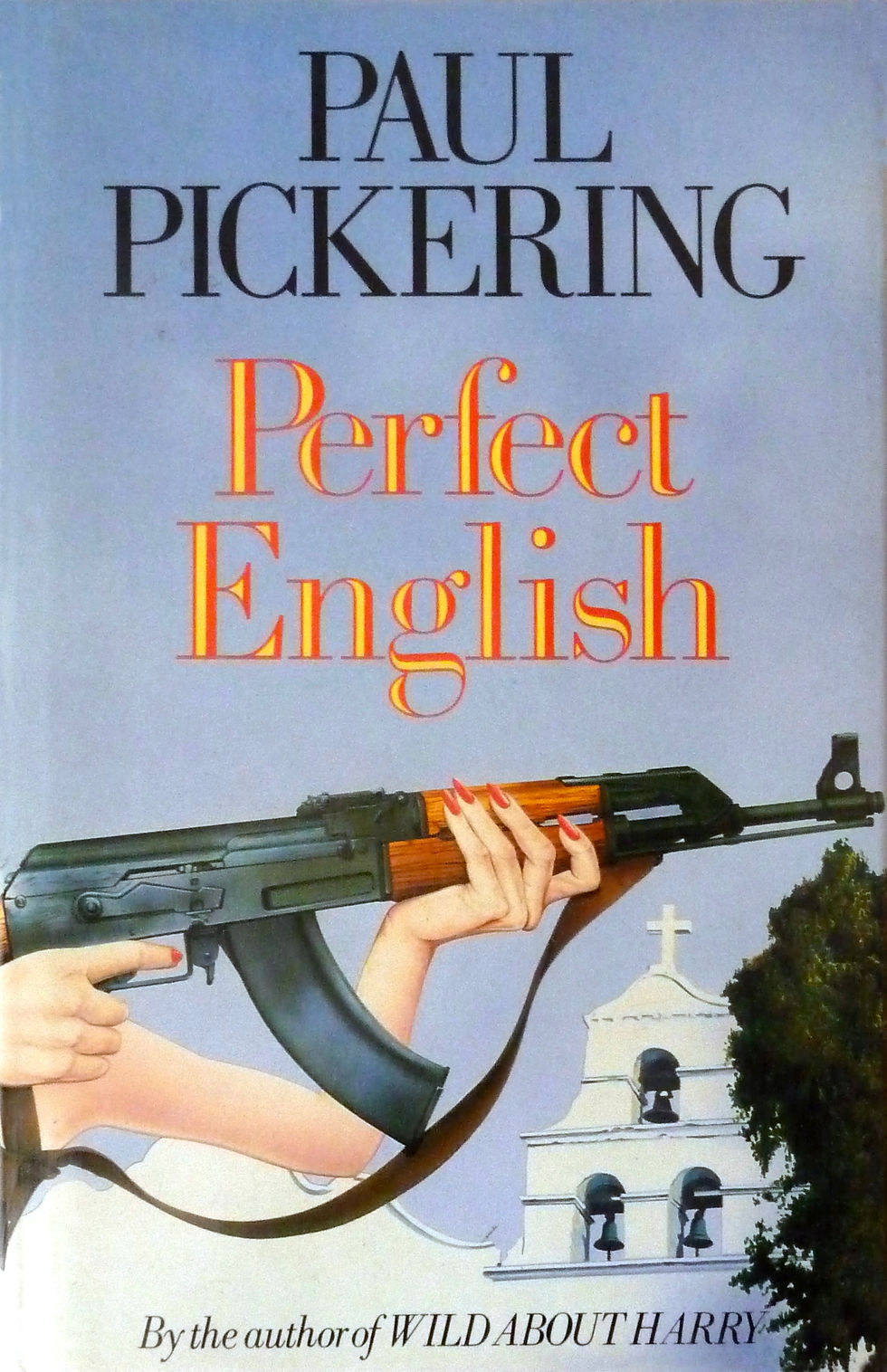
It’s about an aid group teaching English to the Miskito Indians, but they’ve been infiltrated—one of their members has betrayed them and is telling the rogue Sandinistas where the Miskito are so they can kill them. It’s based on a true-ish story. I went there as an internationalista and saw action in the three war zones. In the end I was sent, with acting rank of colonel, to War Zone Three, the Costa Atlántica, and there I had to persuade the rebellious Peter-Paul Zahl, who was a writer, to come back into the fold. He’d spent ten years in jail in Germany for shooting a policeman as a member of the Red Army Faction, and the Sandinistas had accidentally put him in jail. I went down the Río Escondido—the Hidden River where Nelson got dysentery and there was a Contra blockade of Bluefields. We were attacked as soon as we entered the lagoon, but everybody on the boat was either drinking rum or smoking dope and nobody initially realised that we were being shot at. We just thought the reggae was slightly off on the stereo, but actually it was bullets hitting the side of this old wooden boat. And then the Sandys launched their attack boats.

CJLPA: All of this features in your book?
PP: Yes… It was an incredible time. An incredible experience. It’s a lovely country, Paraguay. Managua was a sort of non-stop party capital for people who came over to be Internationalistas but didn’t actually go out into the war zones—which was probably best.
CJLPA: What was the next country you had to travel to?
PP: After that I decided to set a book in Germany, in Berlin, which I like a lot. I started writing a novel about the idea of a murder being committed in the middle of a war. This became The Blue Gate of Babylon, because I didn’t have the central image of the Blue Gate until I went to Berlin. When I went, the Wall hadn’t quite come down, and Potsdamer Platz was not glass and steel, and I managed one night to go down with a Canadian climber lady into the Gestapo shower block and saw the naïve painted Nazi angels that were down there, which connected me back again to Mengele, and to Faust, and school. All the twenty-three-year-old Canadian climber wanted was to get one of these dreadful yellow tiles, as a beer coaster for her dad. I said, ‘No, really awful things have happened here’. But she wasn’t bothered. Again, what gives things moral weight? What makes things terrible? What makes something good? It’s a comedy. But it seems really to touch people.
CJLPA: Why? I mean, why the comedy among all these serious things?
PP: You have to laugh because, if you really think about these things, really let them take you over, you go mad.
CJLPA: This brings me back to your fourth novel, which was banned in the UK.
PP: Oh, Charlie. Charlie is about a person on death row. He starts to think about what would happen if Jesus came back to Earth as an extremely bad person—the worst person who could be.
CJLPA: Why was the book banned?
PP: The book was banned because it contravened a blasphemy law that was re-established in 1979 after a judgment by Lord Denning and only repealed in 2008. Rushdie wasn’t prosecuted for his book because this law was only about Christian blasphemy.
CJLPA: But you published it in the United States.
PP: Yes, Random House published it. My editor there, David Rosenthal, stayed absolutely loyal, but Rushdie’s agent there created a fuss and said they would sue if we tried to promote the book as blasphemous. It was just crazy. You know, ‘I’m the only blasphemer in the village’—ludicrous.
CJLPA: Can I go on to the next chapter in your life? A very traumatic event—and I’m sorry to bring it up.
PP: Oh, I lost an eye, like Rushdie.
CJLPA: What happened in February 1997 at the Groucho Club?
PP: I was stabbed in the eye.
CJLPA: What were you doing there? What was the context?
PP: It was half past seven in the evening. I was walking out of the club and three people jumped me. The one who stabbed me said, ‘You know what this is for, you fucking Jewish puff!’ There were only three women I’d been really intimate with, in love with, in London who knew my grandmother was Jewish. It was traumatic. But eventually, due to my wife and daughter I got over the stabbing which came within a centimetre of killing me and was attempted murder. One of my PhD supervisors thinks it was due to my anti-fascist writing, for which there is no cure.
CJLPA: How did you deal with it? Did you stop writing, or did you get into writing even more, because of this?
PP: That was traumatic. But then a friend went back to Congo—she was Congolese. She was killed by her family. It was all to do with reporting a rape.
CJLPA: So she was killed by her own family?
PP: Yes. It was really sad. She’d always talked about my going to Congo, and I went to Congo, landed at Kinshasa and flew up to Kisangani, which is where Heart of Darkness, Conrad’s novel, is set. The civil war was still going on—the civil war that killed nearly six million people. And I was on the first disintegrating wooden boat back down to Kinshasa, and that was incredible.

I wrote the story of a pianist. It’s called The Leopard’s Wife. There is an old Swahili proverb: ‘Even the leopard has a wife’. Even something so evil, that can kill you, has a good side… The pianist has a sudden epiphany in his life, and it means something for a while, although he dies in the end of the book.
CJLPA: Did you partly write the book, maybe in note form, while in Congo?
PP: No. Nothing. You couldn’t really, not on the boat. We used to have to pitch tents at night on the boat to sleep. One or two places we pitched them on land, but we then had to stand guard. We didn’t have any guns. Probably no point in standing guard, really.
CJLPA: It’s very vivid when you read it, that’s why I was wondering… It’s quite amazing that you can reconstruct everything from memory.
PP: It stays with you. I think that’s the point. There’s a passage in the book, there’s is a point where the river is eight miles wide and there are all these islands, and you’re going forward, but it almost seems like a kaleidoscope, ways opening up in front of you, then going round the back and coming out again. You’re not moving any more. Time stops. Perhaps somebody like Benedict Cumberbatch will play the character of the pianist Smiles one day.
CJLPA: And there’s the idea of the protagonist dying again.
PP: It probably comes from Graham Greene and Ernest Hemingway and what happened to my father and every day in Congo.
CJLPA: There is a sensory setting, always, in your books. There is colour and sound and music, and here, in this particular book, Ludwig van Beethoven. Can you talk a bit about colour?
PP: Vladimir Nabokov talks about synaesthesia; he saw letters as colours, and I see certain times and places where sometimes one colour dominates. When my father died, I didn’t know he was dead. There was a bed in the dining room with a red candlewick bedspread, and the clothes had been put over his head. I turned them down, and the side of his face was very, very red, where obviously the blood had settled. So I kissed him and went to school. But the red in that room… If I think about it, I can reconstruct the whole village of Kimberworth where I grew up—the shops across the road, the house we’d moved from, the shopkeeper and his little dog called Sugar, everything, the buttercups, the number five bus stop. It just comes straight back. Colour is very important.
CJLPA: What is your recent novel, Lucy, about?
PP: Lucy is back in Berlin, probably the real Heart of Darkness. It’s about one person taking over three other people psychologically and sexually in an authoritarian way, in the way Hitler took over a country. And also, there is a subtext. There’s a kibbutz in the novel—a post-war kibbutz—which has also been a pre-war kibbutz in Germany, which is paradoxically taken over by a toxic nationalism.
CJLPA: You’ve talked about the necessity of looking at and analysing evil, analysing people like Mengele, understanding the psychology of these people, looking closely in order not to fall again into the dangers of such radical authoritarianism.
PP: Yes. People either oversimplify events, or they turn them into politics. The Holocaust is a dreadful period in human history, but you’ve got to look at it. It can’t become romanticised or turned into a religion. You’ve got continually to look at the horror and analyse it. Or it will happen again.
CJLPA: After Lucy, you are writing another book. It’s a shorter novel and a new type of genre. Can you talk about it, Conversation with a Lion?
PP: Yes. It’s about possession and being taken over by something outside oneself. But it’s also about understanding reality and the way things fit together. The title is a quote from Ludwig Wittgenstein—that conversations with a lion are impossible because we have different logical frameworks. It’s taken me ten years to write, but it doesn’t look like that because it’s quite a short book and it’s hopefully easy to read. But it’s about everything.
CJLPA: Will you ever produce an autobiography, or something closer to autobiography?
PP: I have begun writing about how Mengele and subsequent events changed the way I look at things.
CJLPA: Would it take another shape rather than fiction?
PP: It would be a sort of meta-fiction in that it would be true—certain things that actually happened, and showing that authoritarianism has not died.
CJLPA: Will you continue in your usual pursuit of going to various countries, or is that finished?
PP: I don’t know. I think I have an affinity towards the road. I like going places.

CJLPA: What does your usual creative day look like? Do you write every day?
PP: I try to. There are different times when I eventually get the pull. It’s like the pull of water-skiing or riding a wave—the pull of the novel. You know, you just have to write. I wrote the final version of The Blue Gate Babylon in two weeks in western Crete. I used to get up at six o’clock in the morning and work till twelve.
CJLPA: You wrote it in two weeks in Crete?
PP: Yeah. I restructured it and wrote the whole of the Blue Gate motif—the central image of the book—and then tied it all together. It was amazing. It was just like somebody else was doing it. When I read it afterwards, it was like somebody else had written it. Then you know that it’s all right.
CJLPA: But when you were in Congo, for example, you didn’t write at all, you said it was all just…experiencing.
PP: Yes, that’s what you’re doing, you’re just soaking it up. Your characters are your structure.
CJLPA: Do you first think of a plot and characters, or an idea?
PP: You’ve got to have an idea of a plot, but you’ve got to let the character then take over and take you through the plot. There are wonderful books on how to write novels and usually, if you do all those things, at the end it’s like eating damp cardboard.
CJLPA: Do you combine characteristics of people you see and meet and create characters? You must be looking…
PP: Yes, some people I put into books.
CJLPA: You have a very vivid imagination. And that comes across in your books.
PP: Imagining, day-dreaming, was not a crime in our family. My first house was about a hundred yards away from Parkgate Forge, and an elephant had actually worked there in the First World War. As a child, you’re imagining amongst all these sparks and red-hot things there was an elephant taking things around. That led to my novel Elephant.
CJLPA: Talking about stories, when you were captured by the Taliban in Afghanistan—and I imagine something like A Thousand and One Nights—you kept telling stories and entertaining your captors until they let you go.

PP: I just began to talk as if I were on some Bolivian marching powder. I just talked and talked and talked. I thought they were not understanding me. But at the very end when I said, ‘oh, can we go now?’, the officer—who was probably a Pakistani Guides officer—said, ‘if you must’. In a perfect Sandhurst English accent. It was a very strange meeting. I think people, whoever they are, there’s a side that’s wonderfully hospitable. I mean, they shot at us when we were coming towards them. I was with my donkey man, and they’d already got my guide. On the Daliz Pass everywhere was covered in snow, it started to snow more and at sixteen thousand feet the donkey man just said there was no point in running. We’d have made a perfect target against the white. So we just went down. I told them I was looking for a goose, which is part of the novel. They said I was a ‘holy fool’, which is about right, and we exchanged tea and biscuits.
This interview was conducted by Gabriella Kardos, an artist and the Chief Arts Editor of The Cambridge Journal of Law, Politics, and Art. In 1976 she escaped communism with her family, fleeing Ceaușescu’s regime in Romania and emigrating to Montreal, Canada in search of freedom. Here she studied Fine Arts at Dawson College and Art History at Concordia University. Kardos taught Art Theory in the Painting and Drawing Department of Concordia University and Painting in the MA course of Vermont College of Norwich University, USA. She holds an MA from Central Saint Martins, London, and has exhibited internationally in solo shows at Czech Museum of Fine Arts, Prague, Anglia Polytechnic University, Ipswich, UK, the Royal Over-Seas League, London as well as in group shows at the Victoria and Albert Museum and Woolwich International Print Fair, London. In 2024, she was shortlisted for the inaugural Cass Art Prize. She lives in London, where she is pursuing her art practice in painting and printmaking alongside her role at CJLPA.


